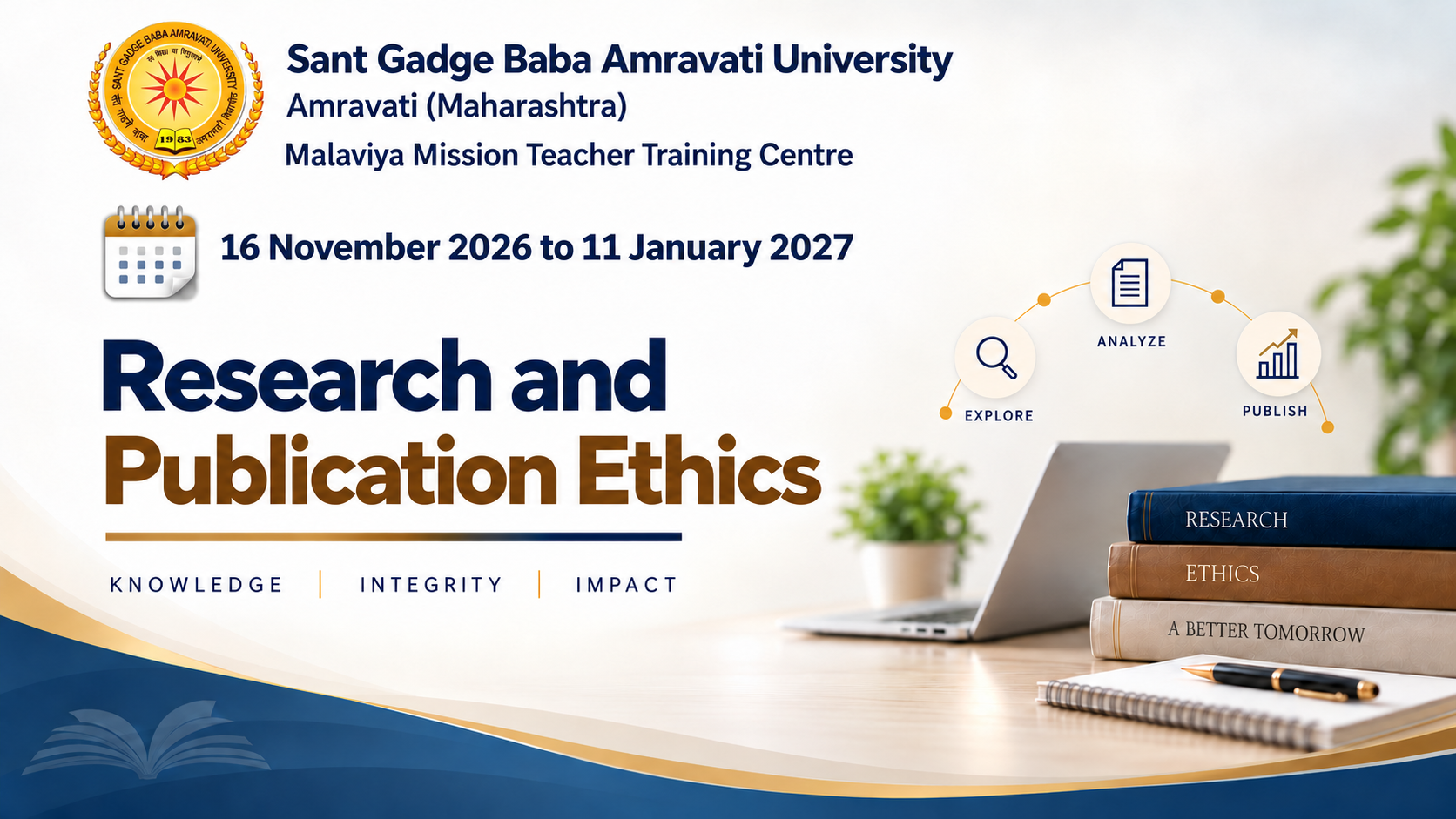
Research advances knowledge through systematic inquiry, critical reasoning, and honest communication. Its credibility depends on the integrity of the research process, respect for evidence, acknowledgement of intellectual contributions, and accountability for published findings. Ethical responsibility therefore extends across every stage of scholarly work, from identifying a research problem to collecting data, interpreting results, and communicating conclusions.
Research and Publication Ethics (RPE) is a mandatory two (02) credit course introduced as part of the Ph.D. Course Work at Sant Gadge Baba Amravati University, Amravati. Offered through the University’s e-Samarth Learning Management System, the course follows an eight-week MOOC format with 30 total learning hours, including assignments, discussion forums, and evaluation.
The course develops learners’ understanding of ethical principles and their application to research and publication. Learners will examine responsible research conduct, publication standards, journal selection, research impact, and ethical use of artificial intelligence. Transparency, reproducibility, and accountability provide a common foundation across the course.
Course Objectives:
To inculcate ethical principles in research and publication
To develop competencies in responsible research conduct
To sensitize learners to global publication standards
To equip scholars with tools for journal selection and impact analysis
To integrate AI ethics and responsible digital research practices
To promote transparency, reproducibility, and accountability
Course Learning Outcomes:
Upon successful completion, students/learners will be able to:
Apply ethical frameworks in research design and publication
Demonstrate integrity in authorship, data handling, and reporting
Identify and avoid predatory and unethical publishing practices
Use indexing databases and research metrics responsibly
Critically evaluate and ethically use AI tools in research workflows
Comply with international standards (COPE, WAME, emerging AI norms)
- Teacher: Prof. Mohammad Atique
- Teacher: Suhas Pachpande
Prologue
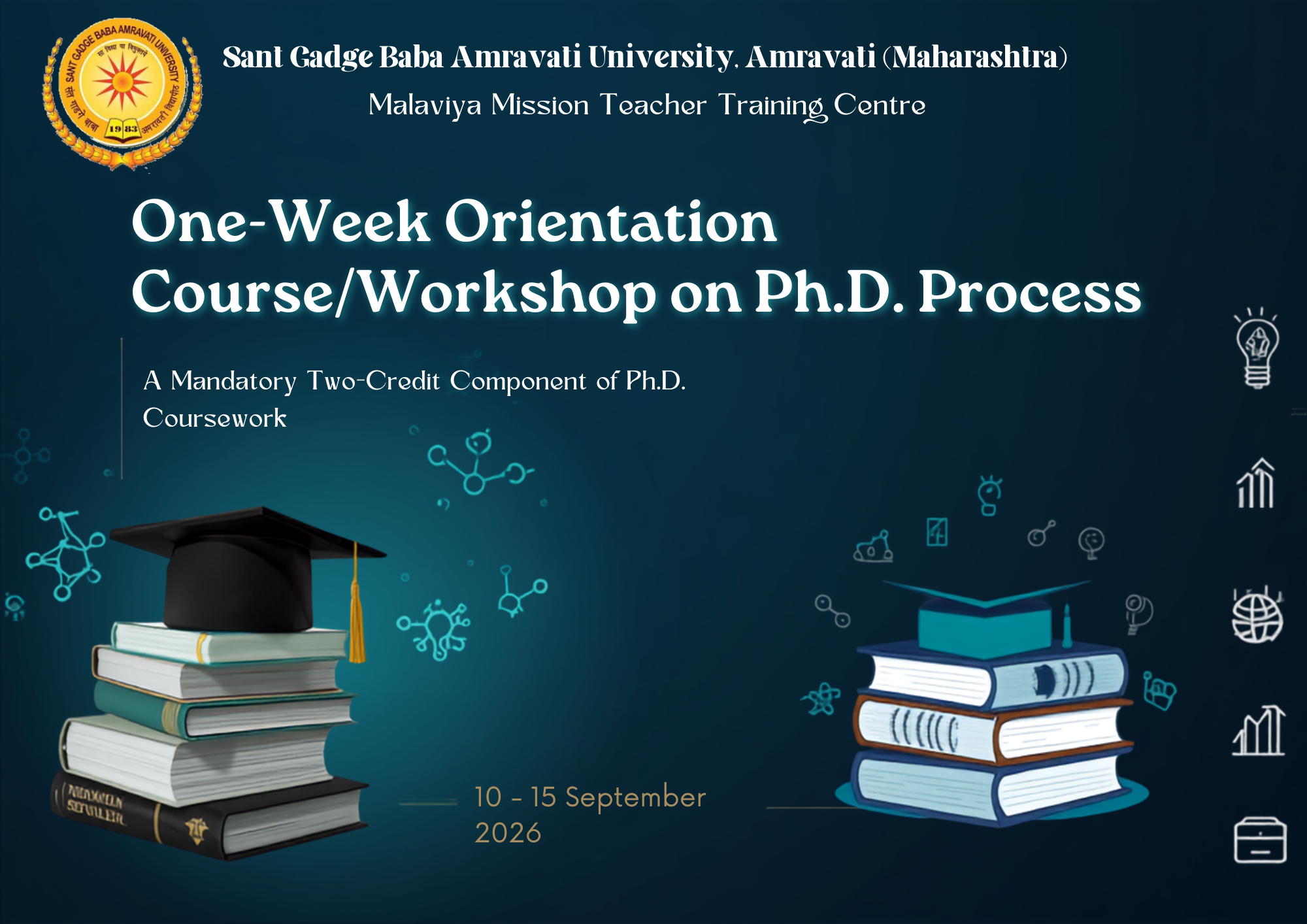
The One-Week Orientation Course/Workshop on Ph.D. Process provides a structured foundation for beginning doctoral research. It familiarizes scholars with the Ph.D. lifecycle, institutional procedures, research design, methodology, academic writing, research ethics, academic integrity, funding opportunities, and digital research tools.
The programme aims to develop research readiness by enabling scholars to identify meaningful research problems, prepare a preliminary research proposal, follow ethical and plagiarism norms, access research support and funding, and connect their research with regional and societal needs. It seeks to establish the essential foundation for rigorous, ethical, responsible, and socially relevant doctoral research.
Objectives:
The programme aims to:
- To provide a comprehensive orientation and understanding of the Ph.D. ecosystem;
- To familiarize research scholars with the complete Ph.D. progression and key institutional procedures;
- To develop foundational research competencies;
- To inculcate principles of research ethics, academic integrity, and responsible conduct;
- To orient scholars towards compliance, responsibilities, and support systems
Course Learning Outcomes:
Upon successful completion, students/learners will be able to:
- Understand the complete Ph.D. lifecycle;
- Develop a preliminary research proposal;
- Apply ethical and plagiarism norms;
- Identify funding opportunities;
- Align research with regional and societal needs
- Course Coordinator: Head L.& I.SCI.DEPTT.
Prologue
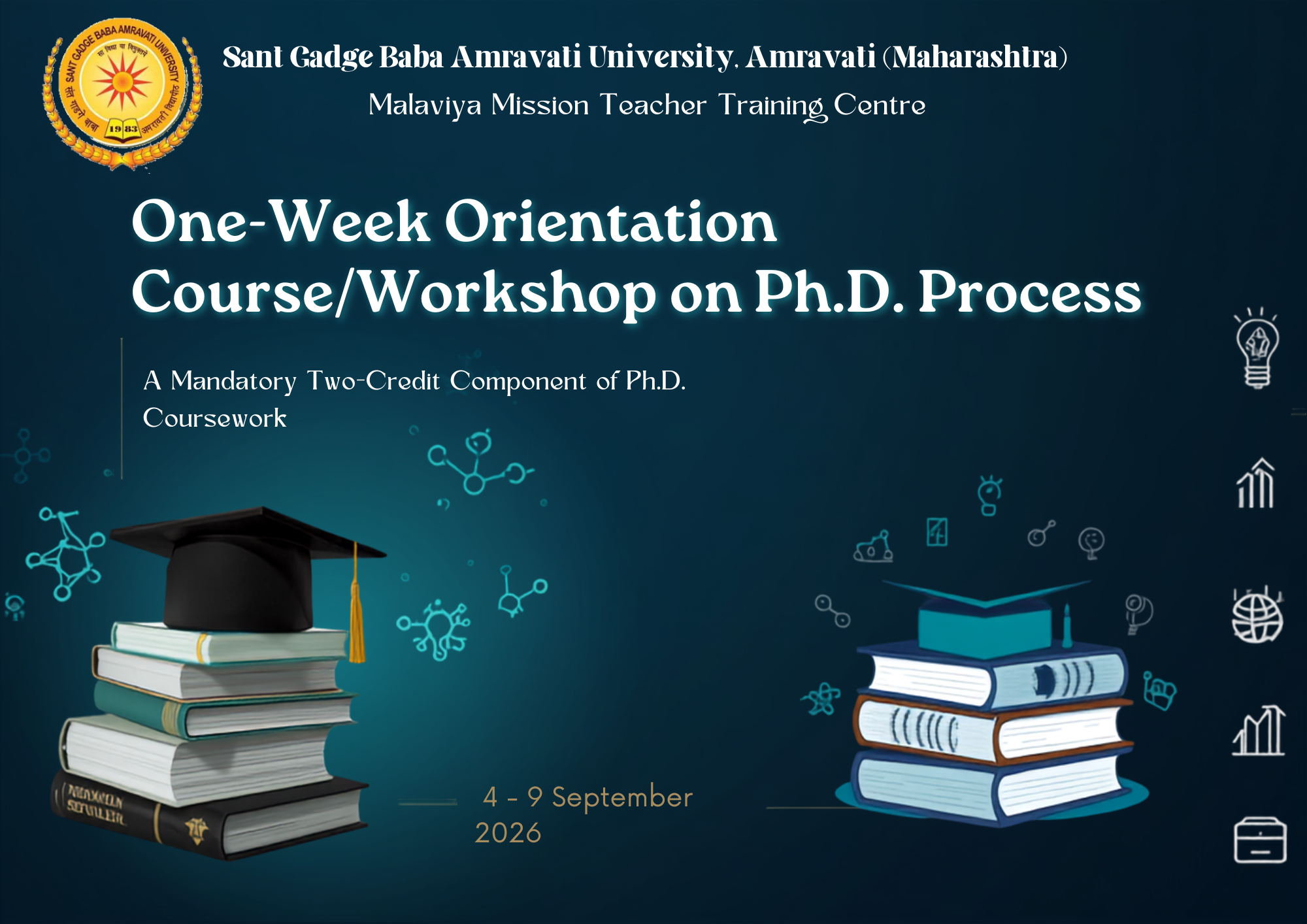
The One-Week Orientation Course/Workshop on Ph.D. Process provides a structured foundation for beginning doctoral research. It familiarizes scholars with the Ph.D. lifecycle, institutional procedures, research design, methodology, academic writing, research ethics, academic integrity, funding opportunities, and digital research tools.
The programme aims to develop research readiness by enabling scholars to identify meaningful research problems, prepare a preliminary research proposal, follow ethical and plagiarism norms, access research support and funding, and connect their research with regional and societal needs. It seeks to establish the essential foundation for rigorous, ethical, responsible, and socially relevant doctoral research.
Objectives:
The programme aims to:
- To provide a comprehensive orientation and understanding of the Ph.D. ecosystem;
- To familiarize research scholars with the complete Ph.D. progression and key institutional procedures;
- To develop foundational research competencies;
- To inculcate principles of research ethics, academic integrity, and responsible conduct;
- To orient scholars towards compliance, responsibilities, and support systems
Course Learning Outcomes:
Upon successful completion, students/learners will be able to:
- Understand the complete Ph.D. lifecycle;
- Develop a preliminary research proposal;
- Apply ethical and plagiarism norms;
- Identify funding opportunities;
- Align research with regional and societal needs
- Course Coordinator: Sujata Kale
Prologue
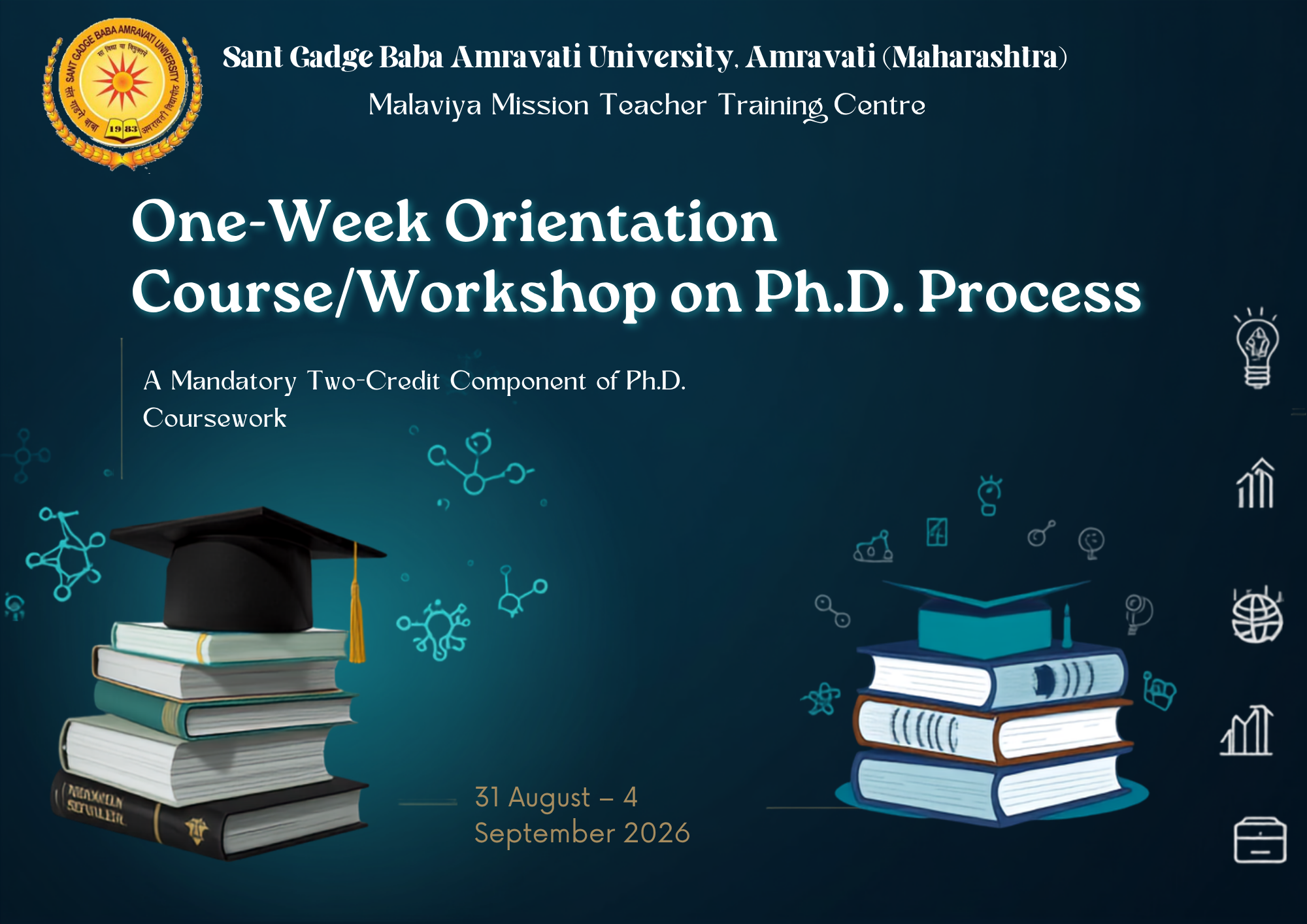
The One-Week Orientation Course/Workshop on Ph.D. Process provides a structured foundation for beginning doctoral research. It familiarizes scholars with the Ph.D. lifecycle, institutional procedures, research design, methodology, academic writing, research ethics, academic integrity, funding opportunities, and digital research tools.
The programme aims to develop research readiness by enabling scholars to identify meaningful research problems, prepare a preliminary research proposal, follow ethical and plagiarism norms, access research support and funding, and connect their research with regional and societal needs. It seeks to establish the essential foundation for rigorous, ethical, responsible, and socially relevant doctoral research.
Objectives:
The programme aims to:
- To provide a comprehensive orientation and understanding of the Ph.D. ecosystem;
- To familiarize research scholars with the complete Ph.D. progression and key institutional procedures;
- To develop foundational research competencies;
- To inculcate principles of research ethics, academic integrity, and responsible conduct;
- To orient scholars towards compliance, responsibilities, and support systems
Course Learning Outcomes:
Upon successful completion, students/learners will be able to:
- Understand the complete Ph.D. lifecycle;
- Develop a preliminary research proposal;
- Apply ethical and plagiarism norms;
- Identify funding opportunities;
- Align research with regional and societal needs
- Course Coordinator: Head MARATHI